
PlINTH
The view alone does not make a home. But how a dwelling holds the horizon, how it frames light and nurtures life, transforms outlook into a grounded belonging. That distinction was where this project began.
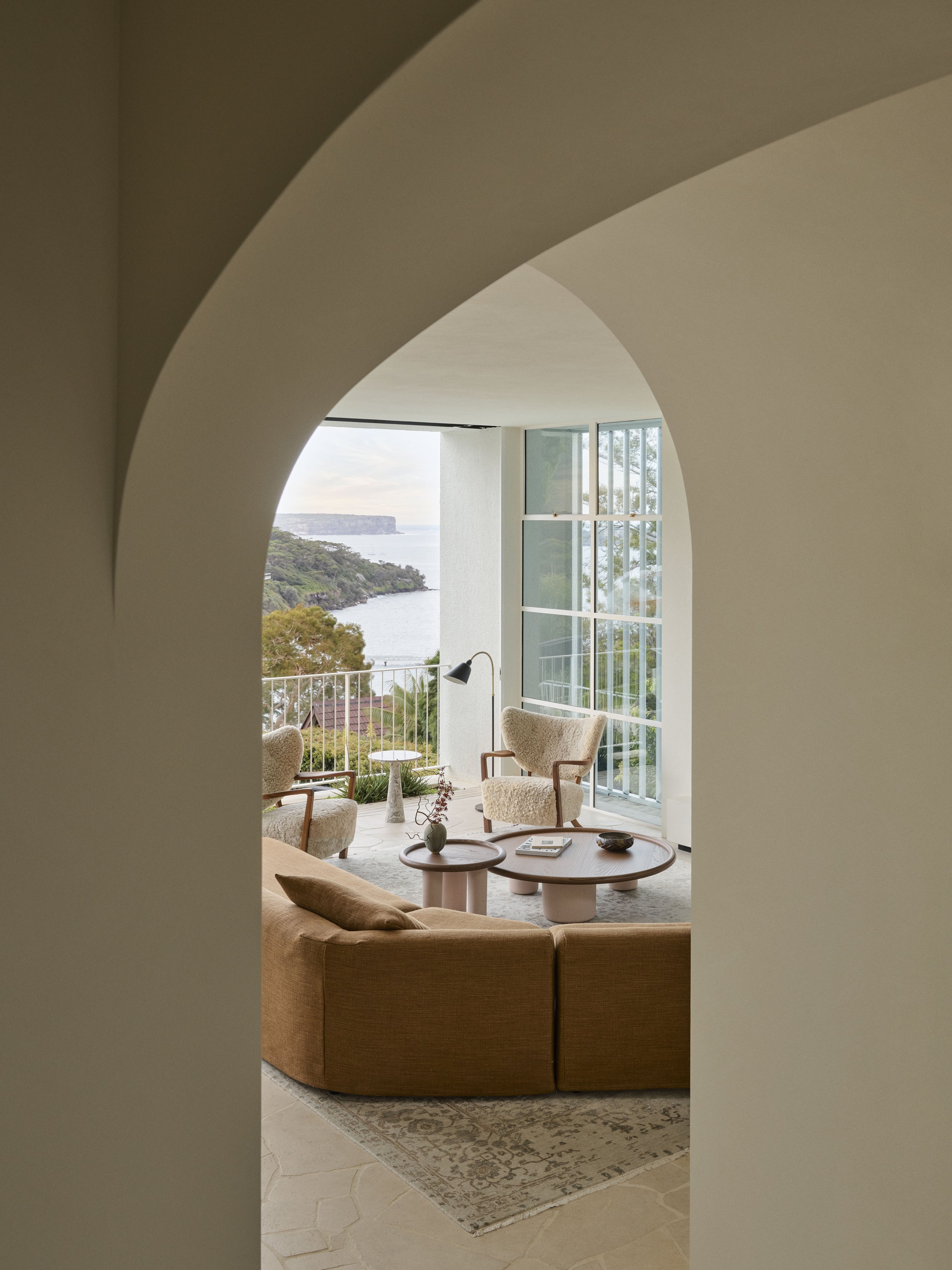
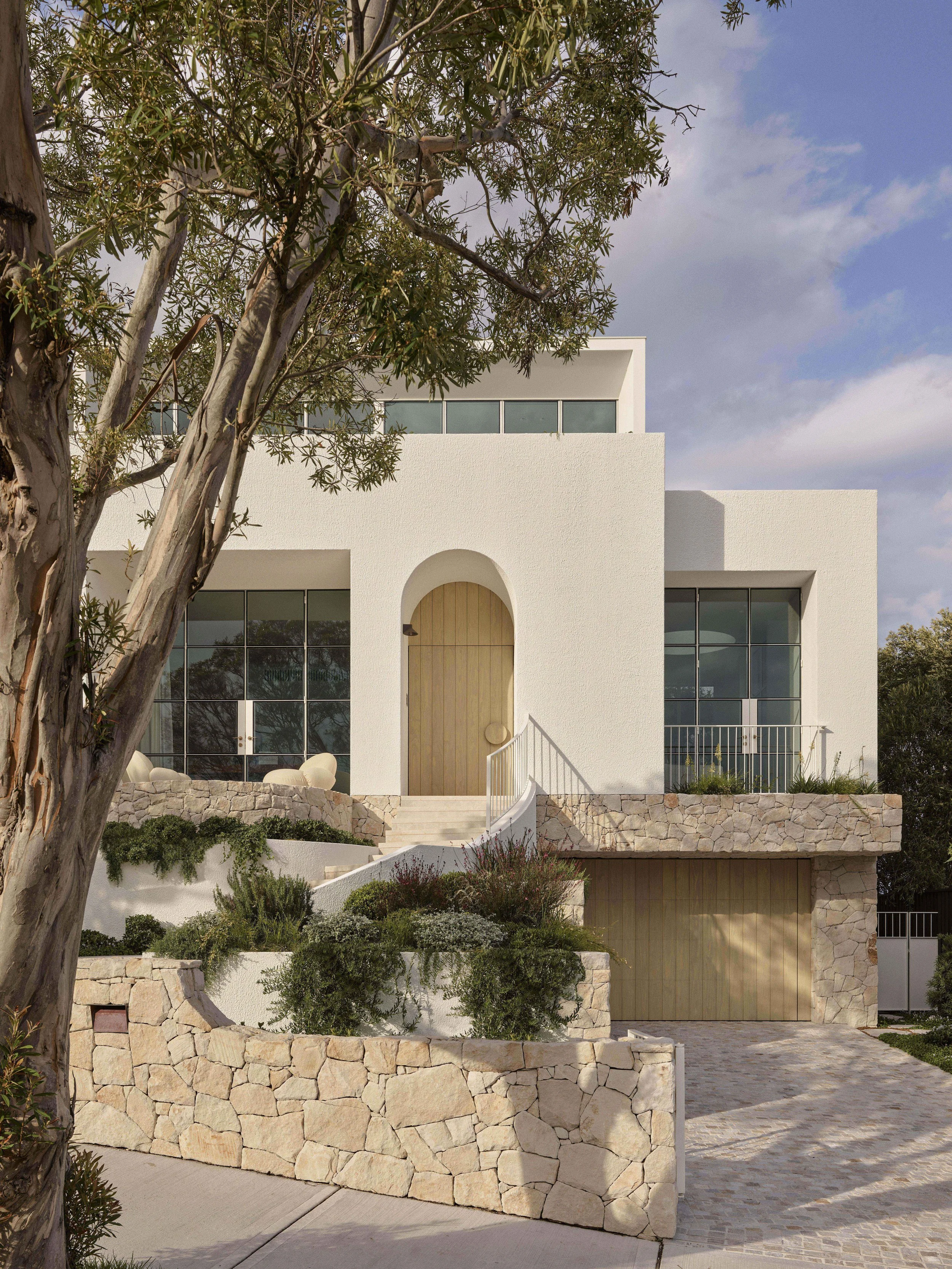
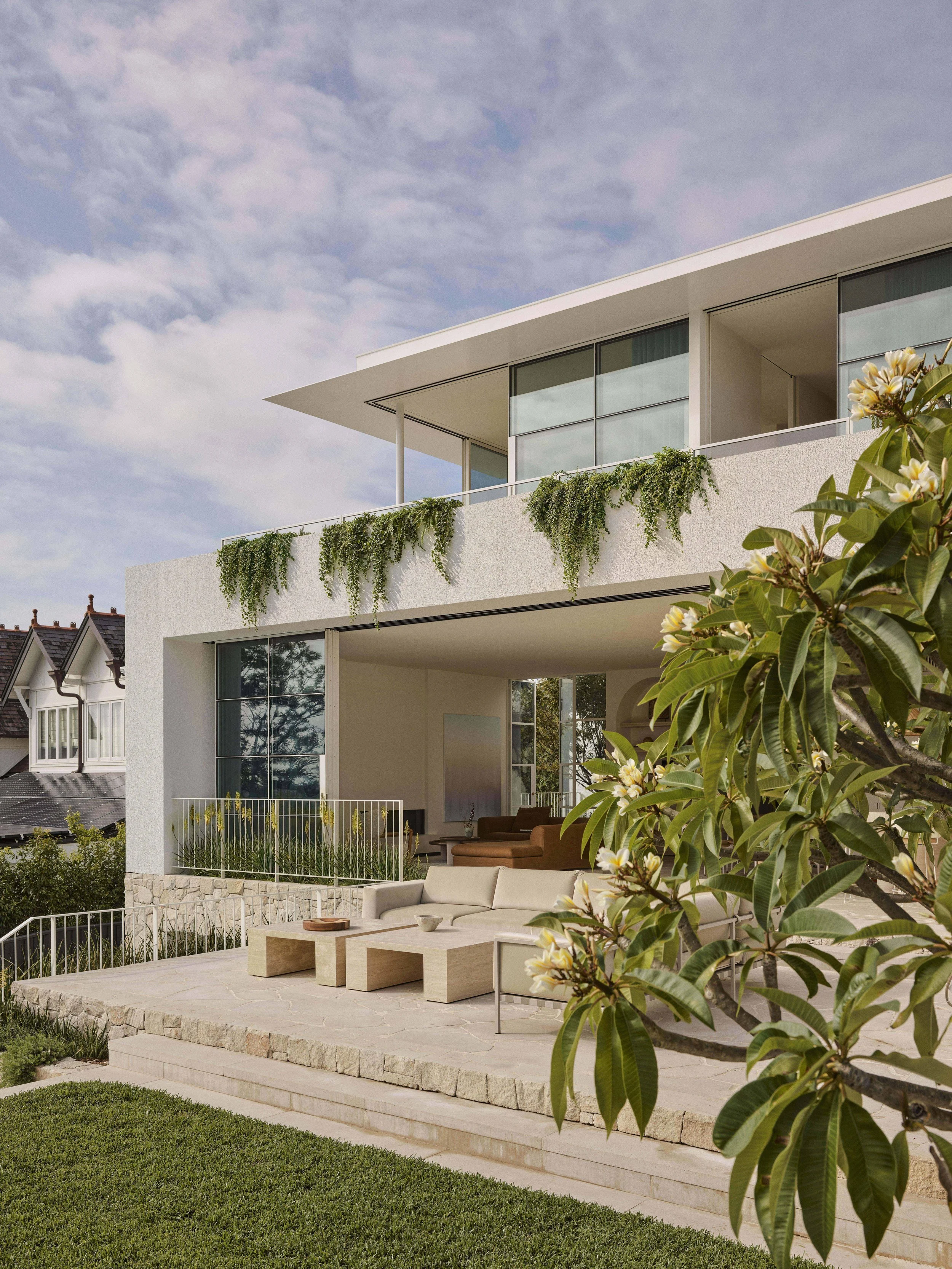
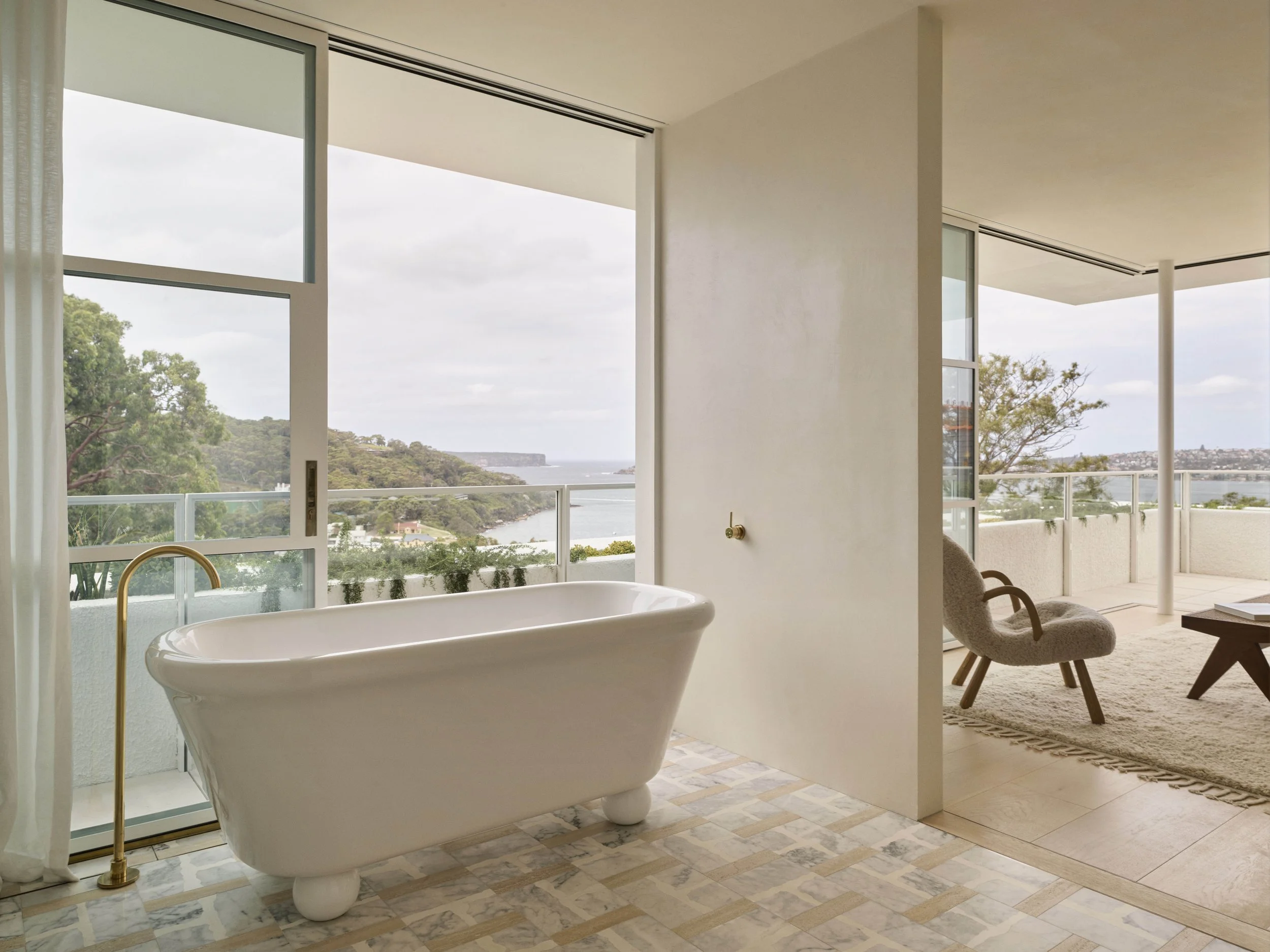
Plinth is a Mosman residence that negotiates the tension between outlook and interiority. The central concept emerges from the stratified harbour landscape and the textured bark of the eucalypts that define this stretch of coastline. Anchored by sandstone at ground level, the house sheds weight and reaches for the light as it rises; glass and fine steel replacing stone to capture views at the upper levels.
The clients had renovated before, but a poorly oriented previous home had left them perpetually chasing light; an experience that shaped the brief with clarity. This time, sunlight was non-negotiable. The design began entirely anew not from an aesthetic reference point, but from the fundamentals of how the house should perform.
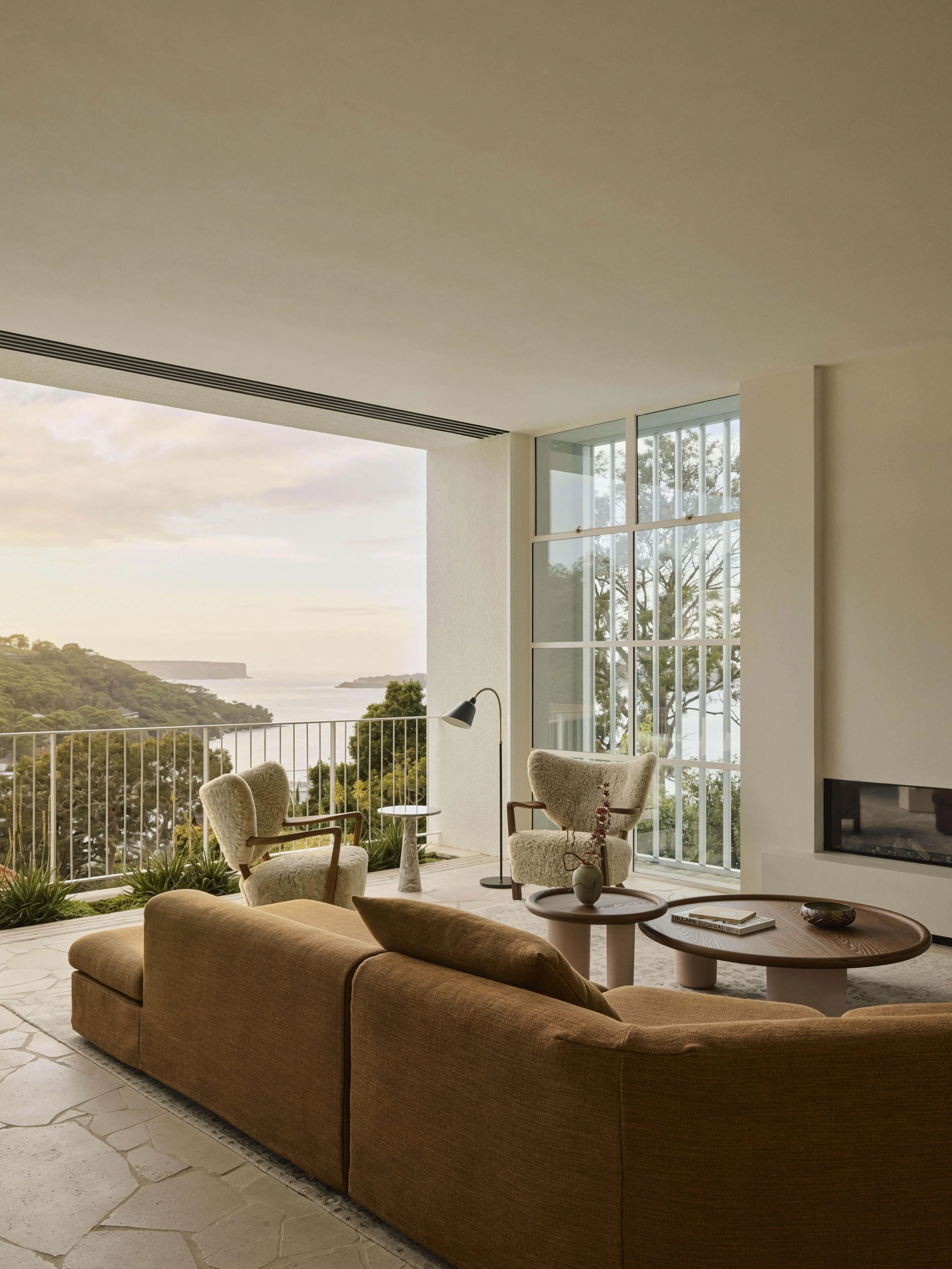
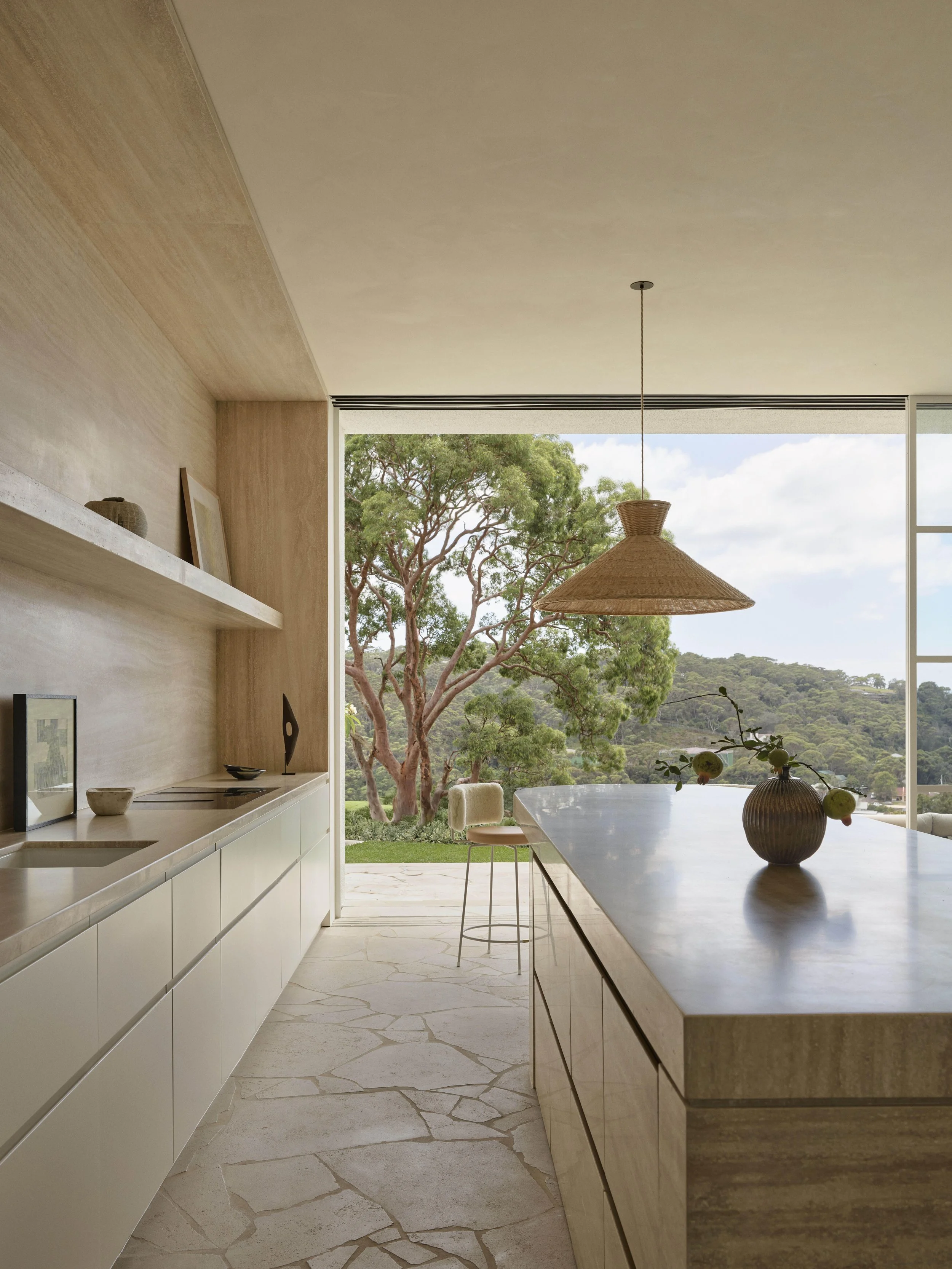
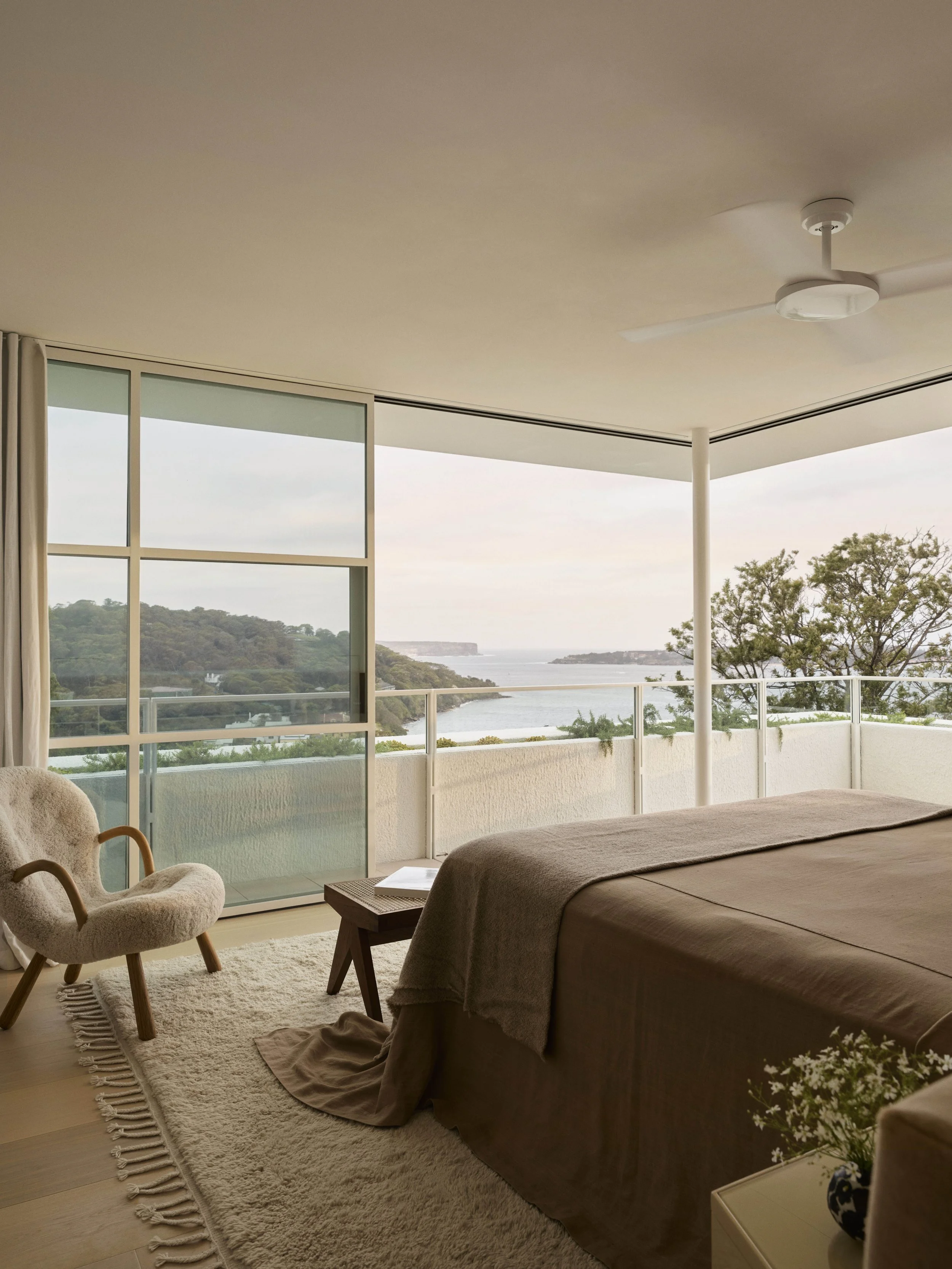
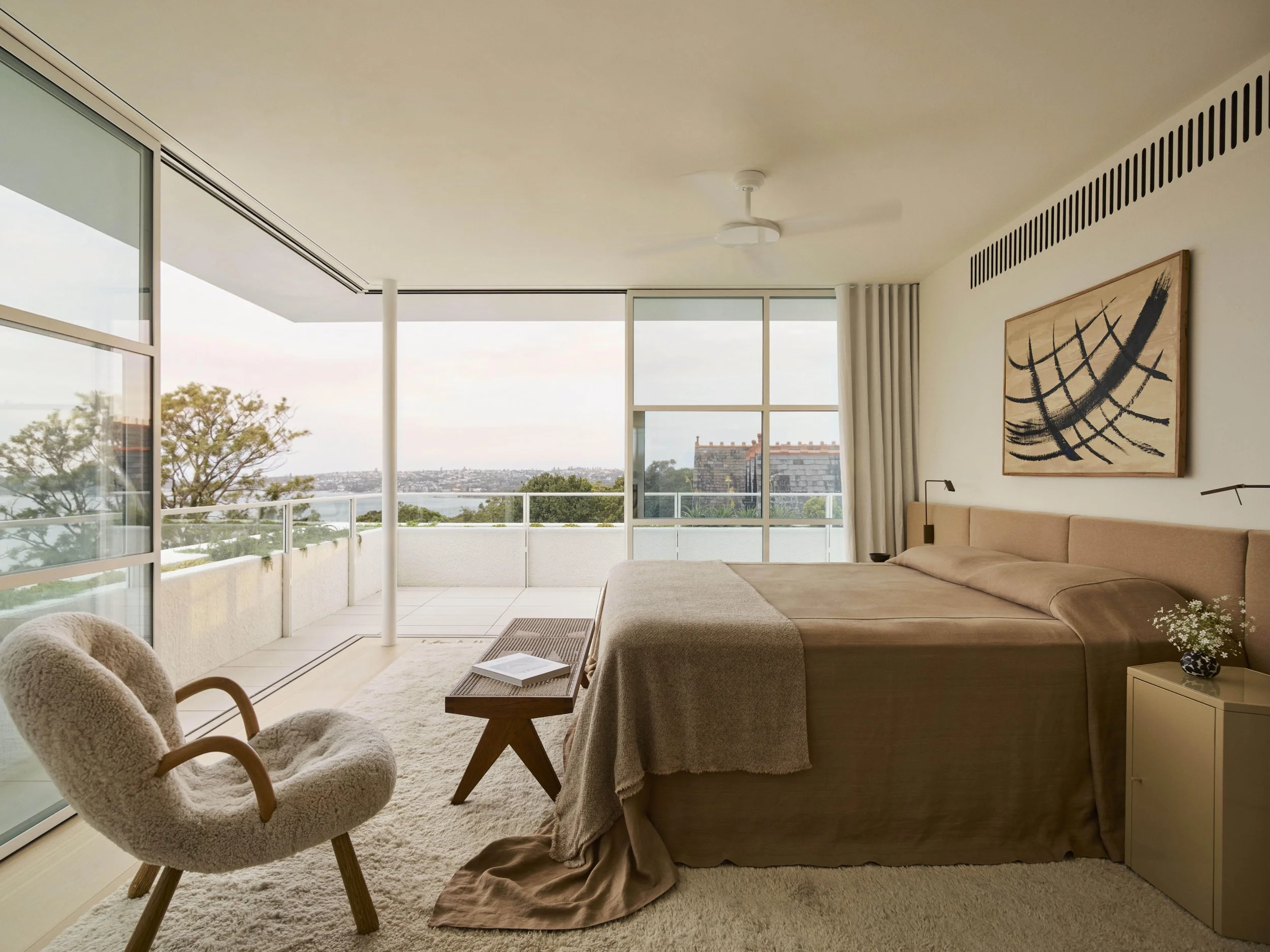
The site itself was immediately compelling, offering both expanse and intimacy: deep, layered sea and headland views to Chowder Bay and North Head, across to Watsons Bay, and city views to the south. Northern orientation formed every decision that followed. Generous eaves admit winter sun while mitigating summer glare; a central courtyard draws light into south-facing rooms; cross ventilation threads through the plan. The design is fundamentally shaped by passive solar principles, with the architecture taking its cues from that logic.
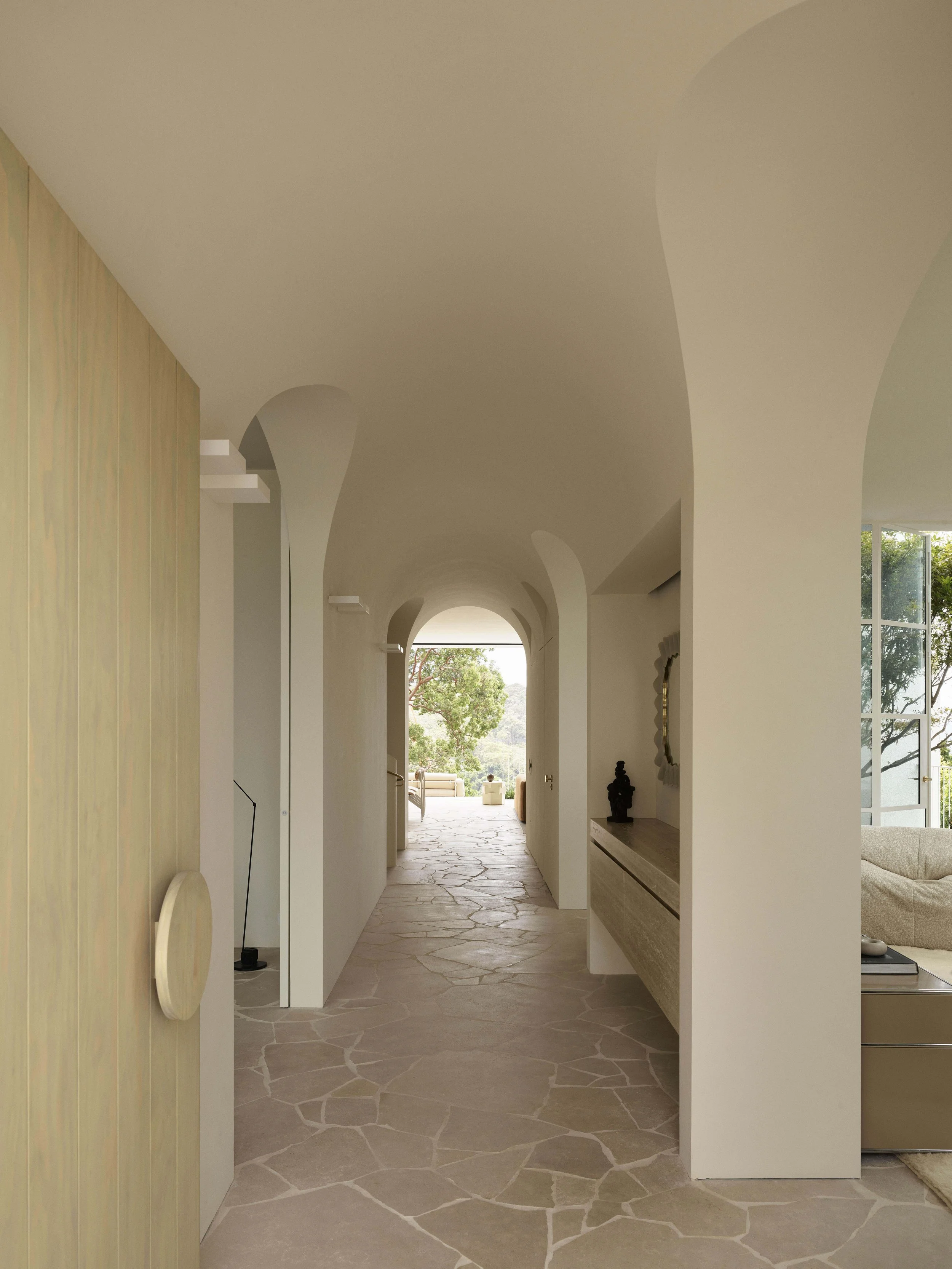
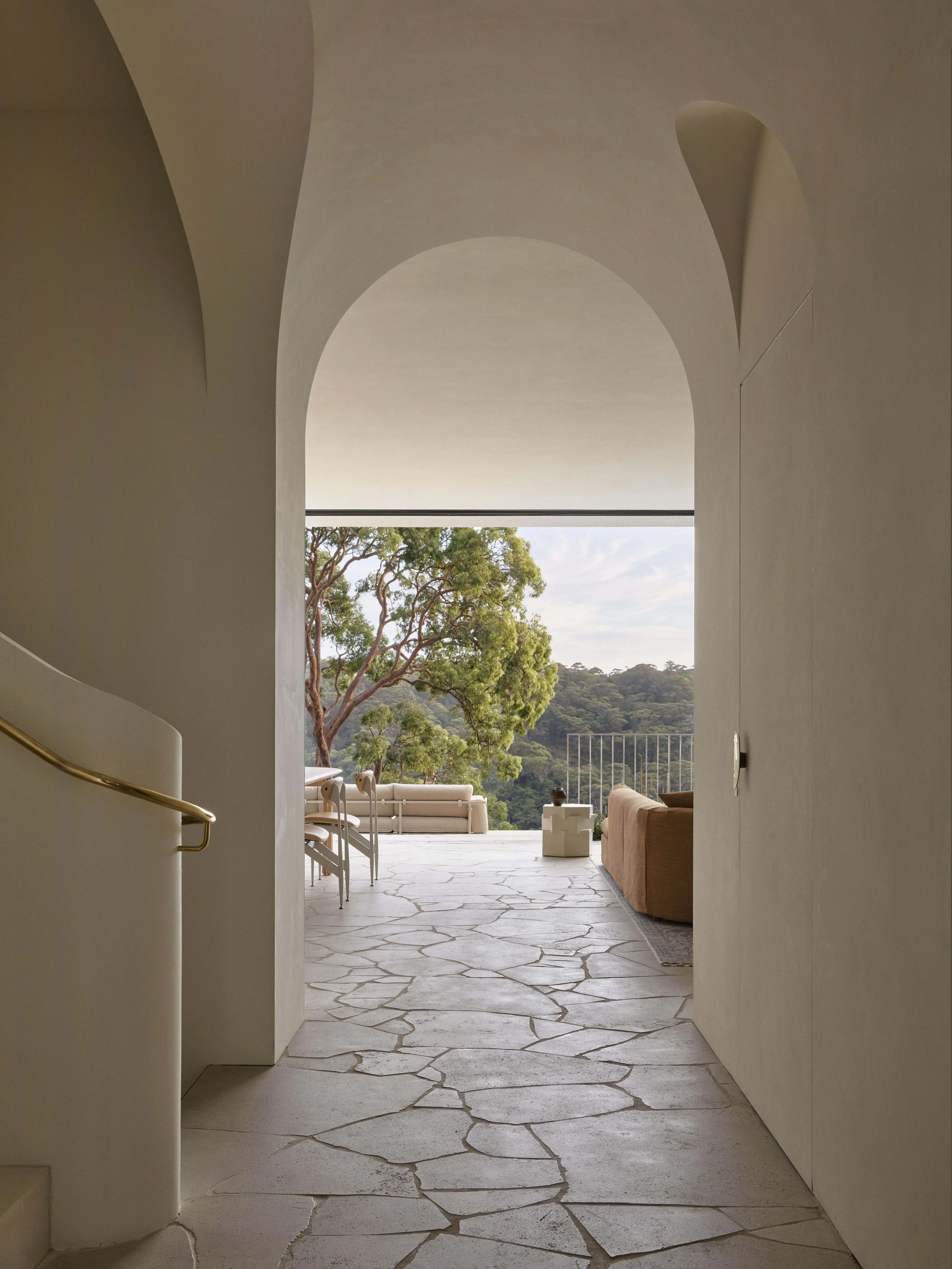
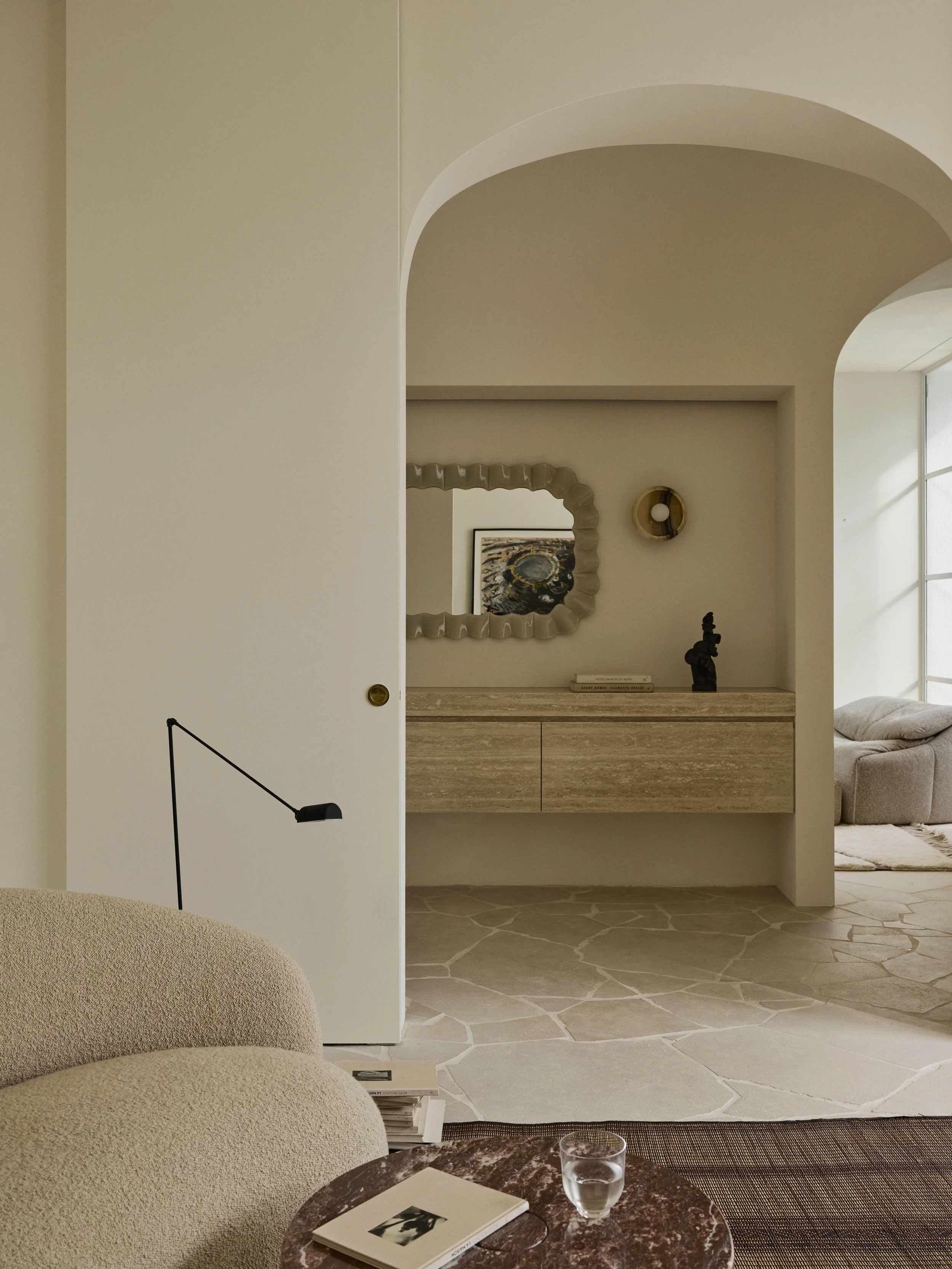
The dwelling’s stone base is not merely cladding; it extends inside to become floor, creating a journey of material continuity and cementing the gesture of an earthbound foundation supporting lightness above. Controlling the perceived scale of the house was equally important as the more delicate upper volumes read as floating forms, giving a three-storey home the visual presence of two, its massing calibrated to sit within rather than dominate the landscape.
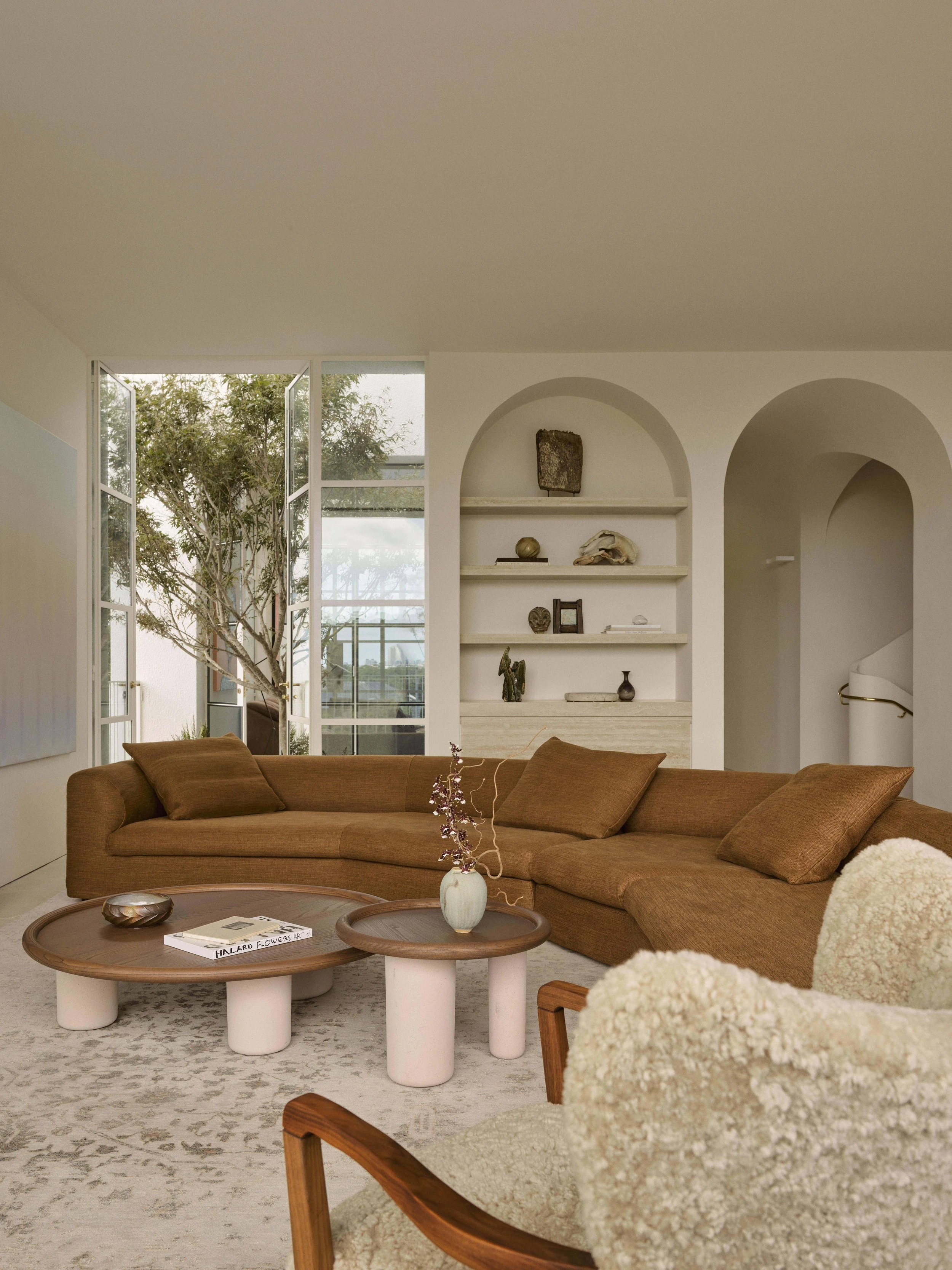
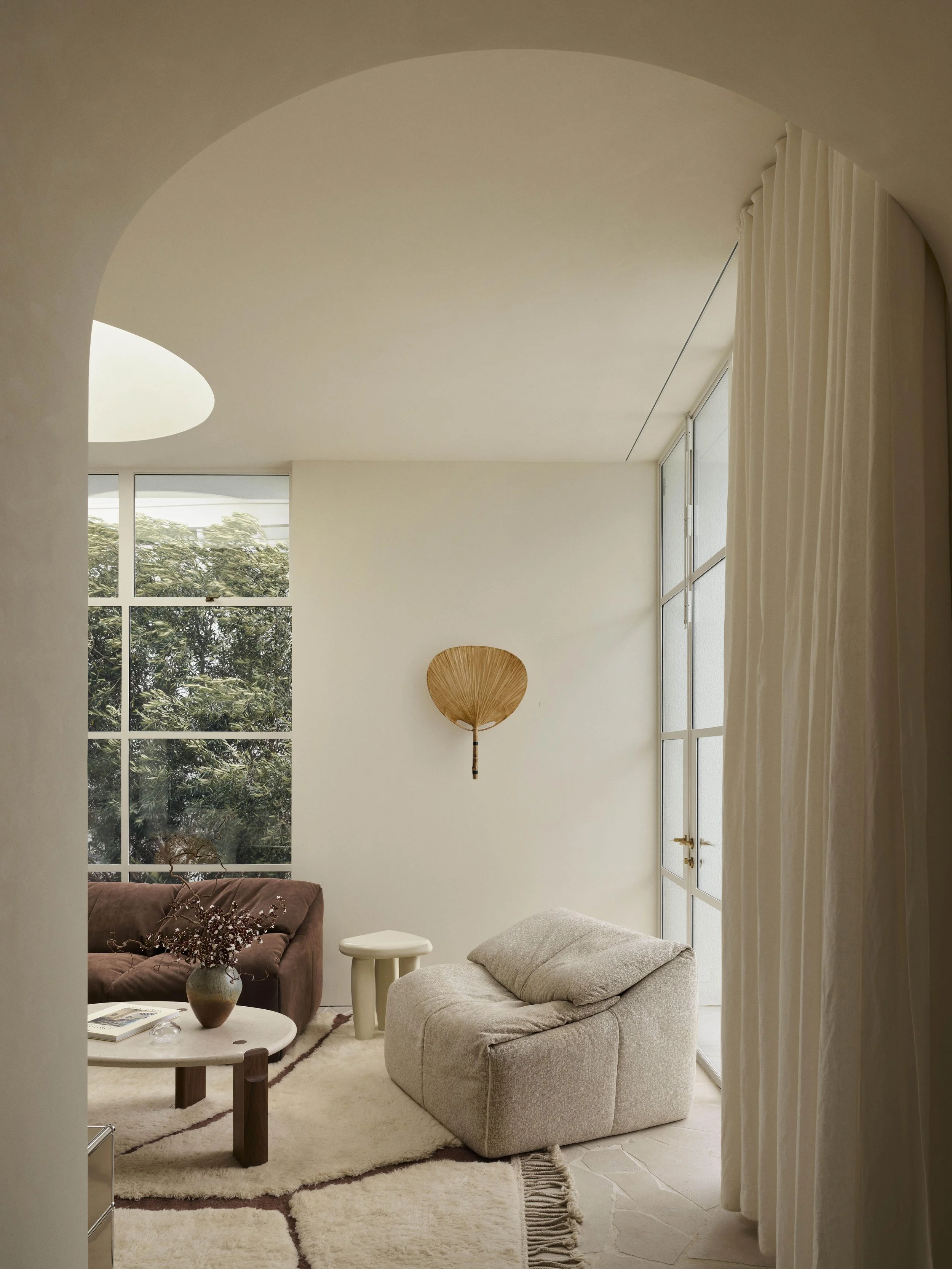
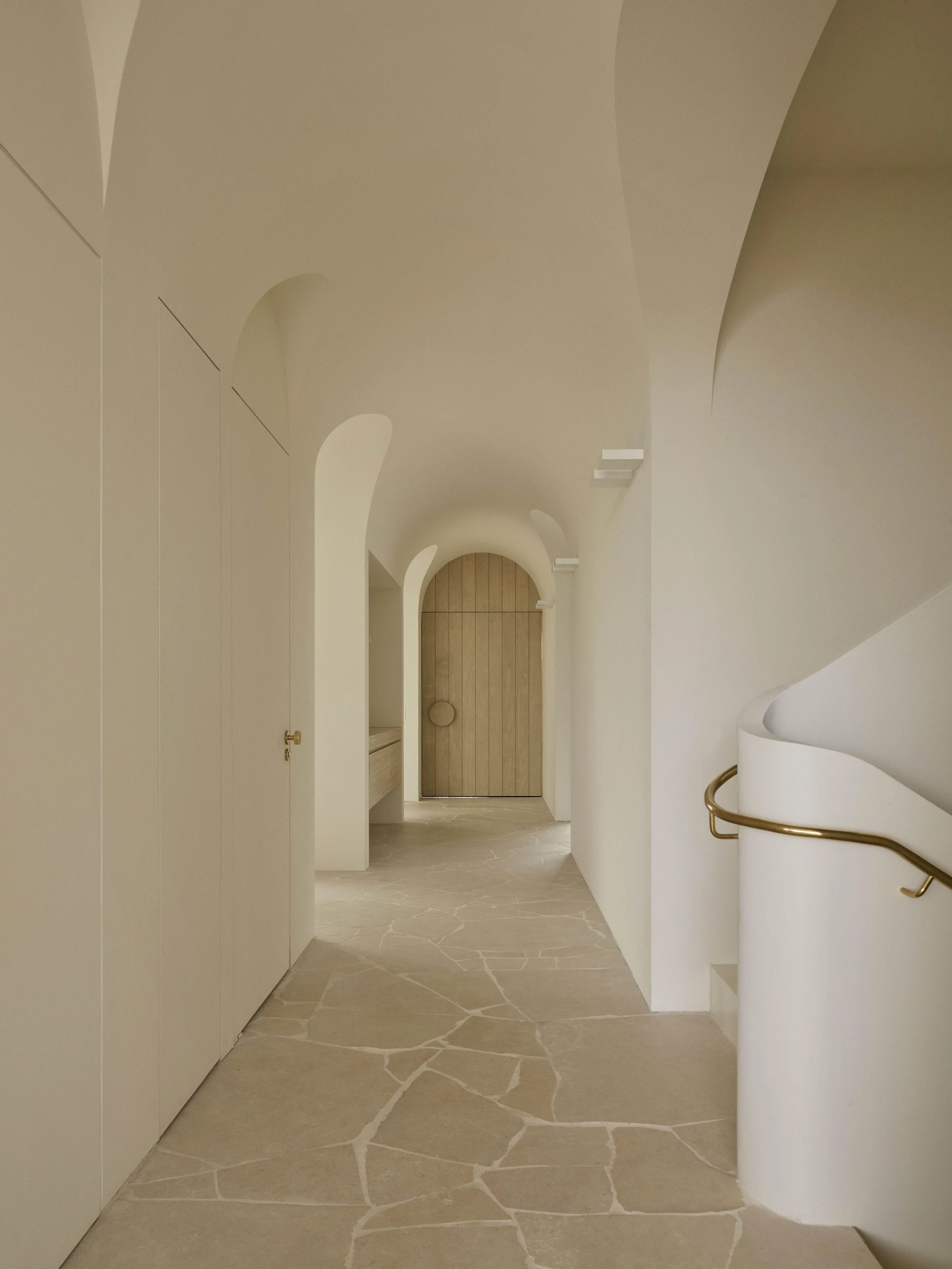
Arrival unfolds with intention. A vaulted arch introduces sculptural softness at the threshold, its curve playing against the textured irregularity of limestone crazy paving that connects interior and exterior underfoot across the entry level. The front door opens directly to a view anchored by an Angophora, the tree framed precisely by the arch, establishing from the first moment a dialogue between the house and its landscape.
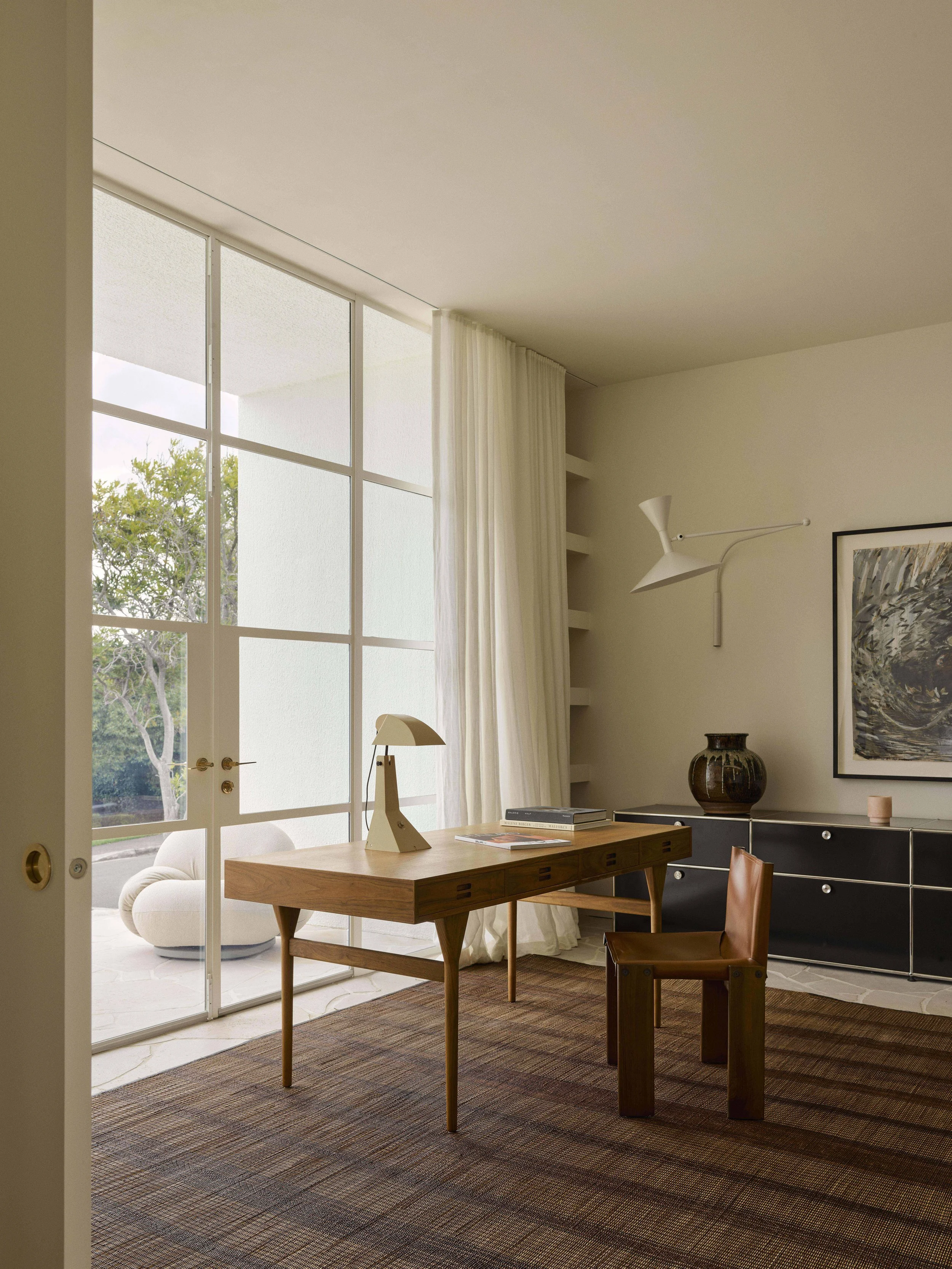
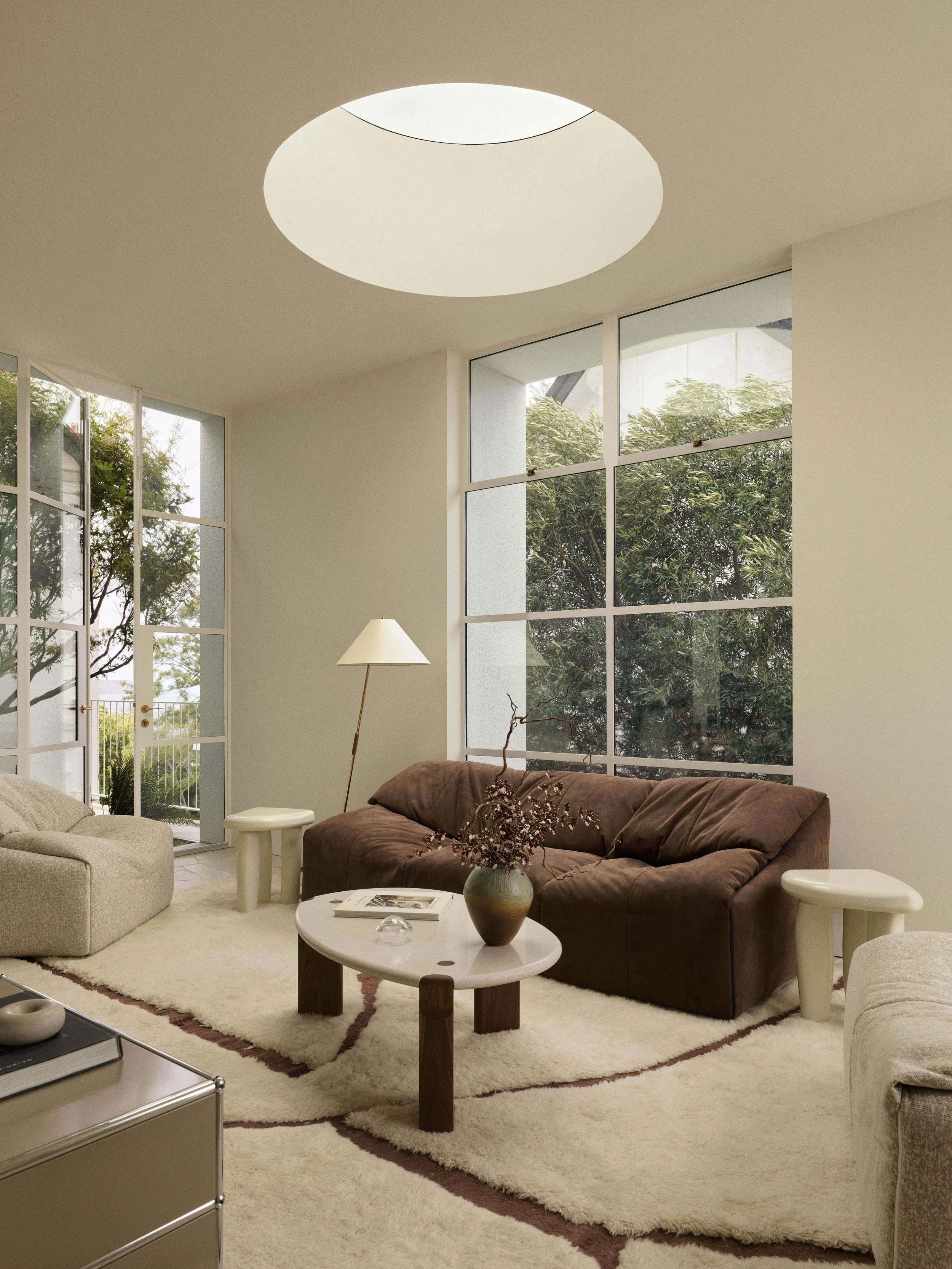
The hallway operates as both processional spine and moment of decompression, rooms branching to either side: a study oriented to the street-front garden, and opposite, a secondary sitting room opened further to light with extended glazing and a skylight above (a doorless retreat designed with the family's two adult children in mind). It speaks to a household of togetherness and privacy in equal measure. A household that also needed to diplomatically accommodate four dogs whose internal rivalries required their own spatial resolution.
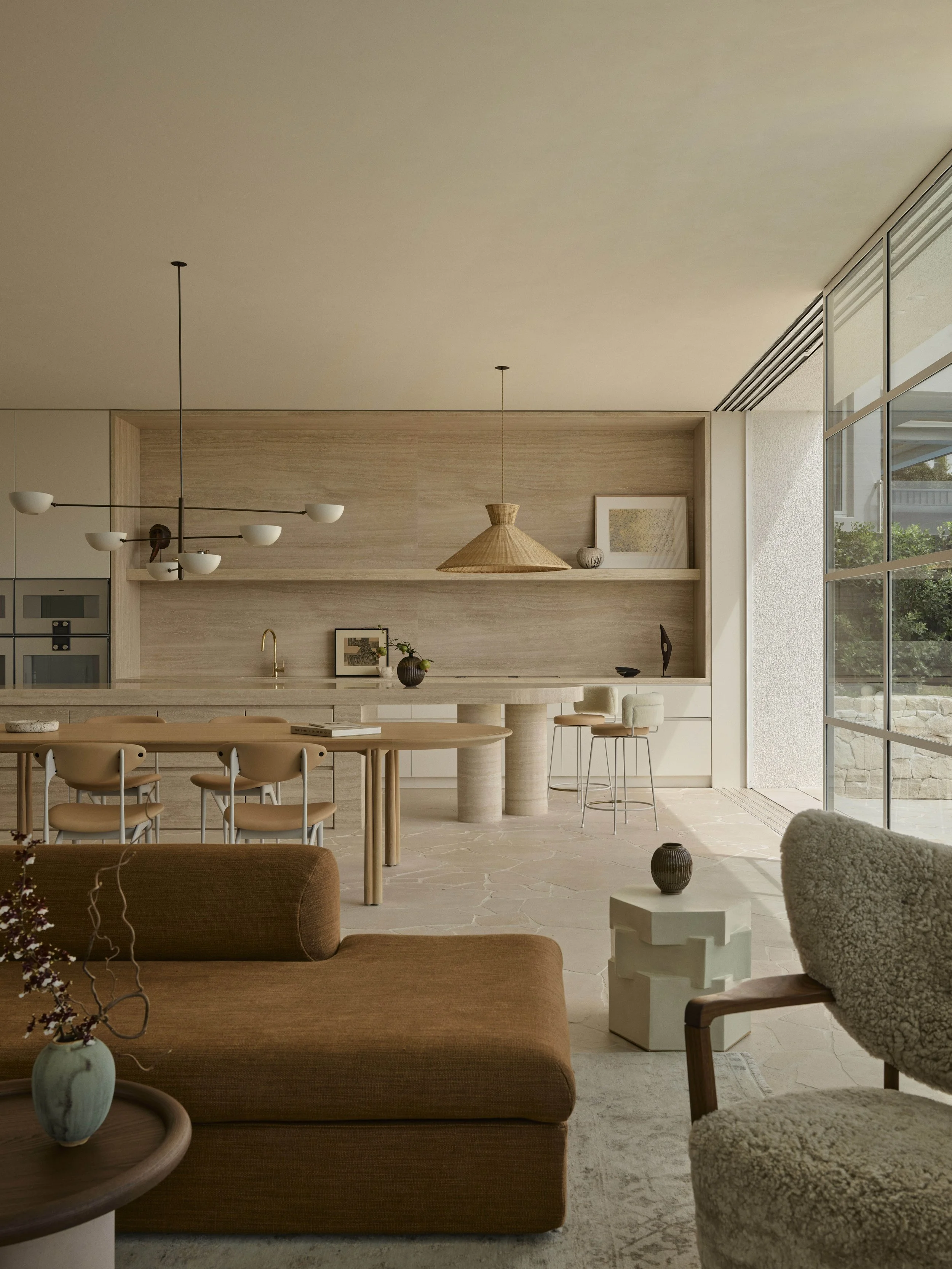
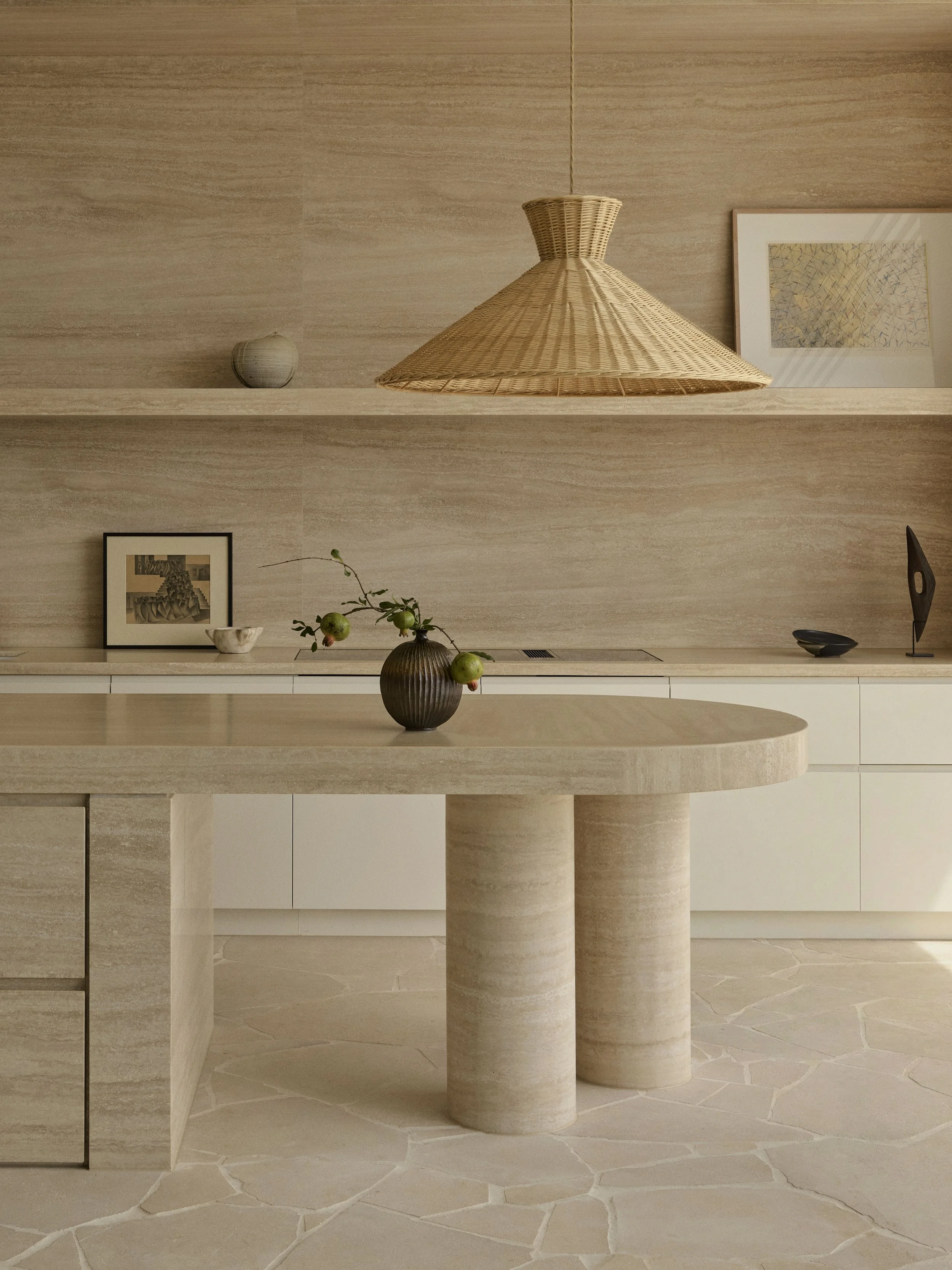
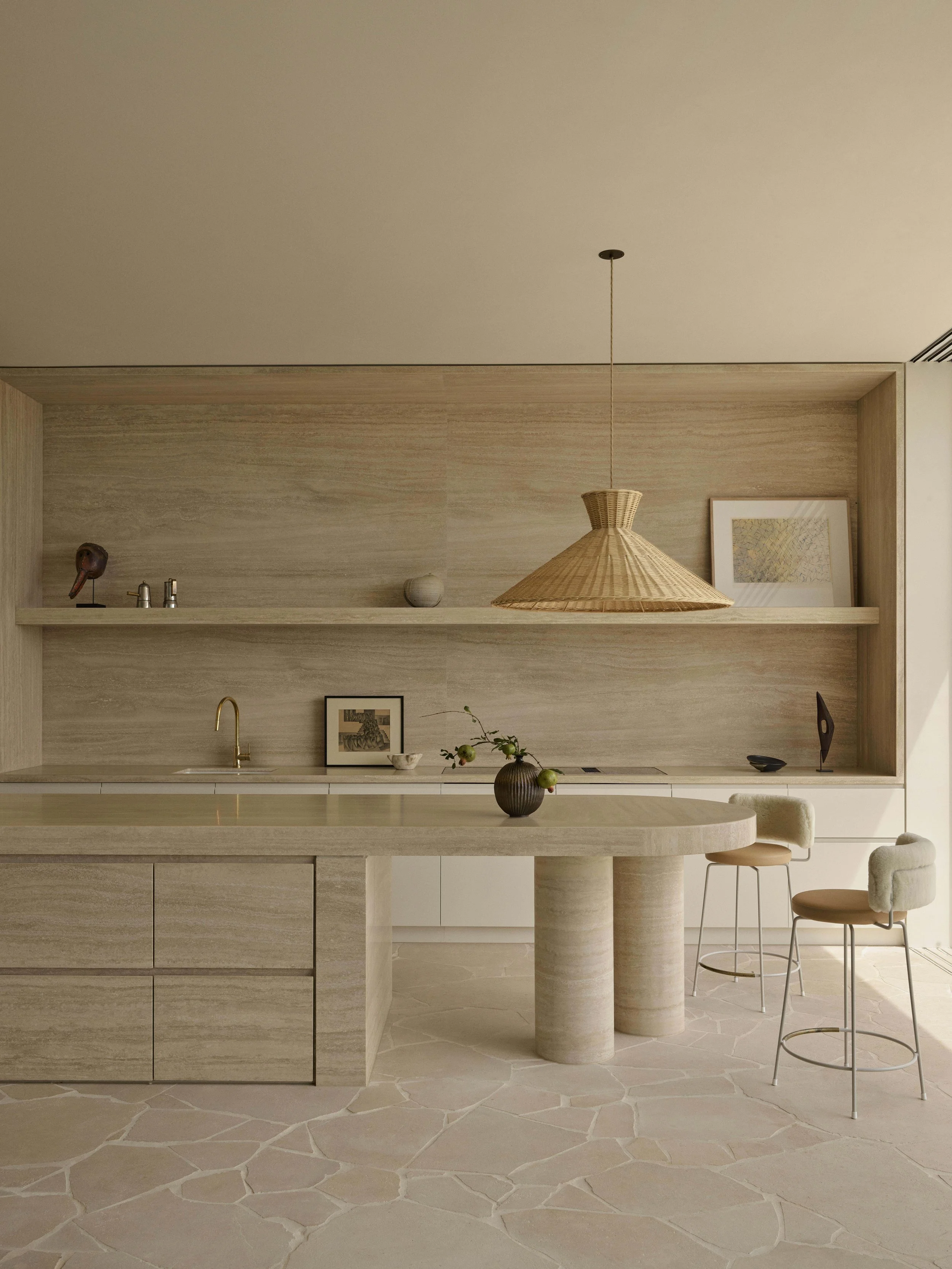
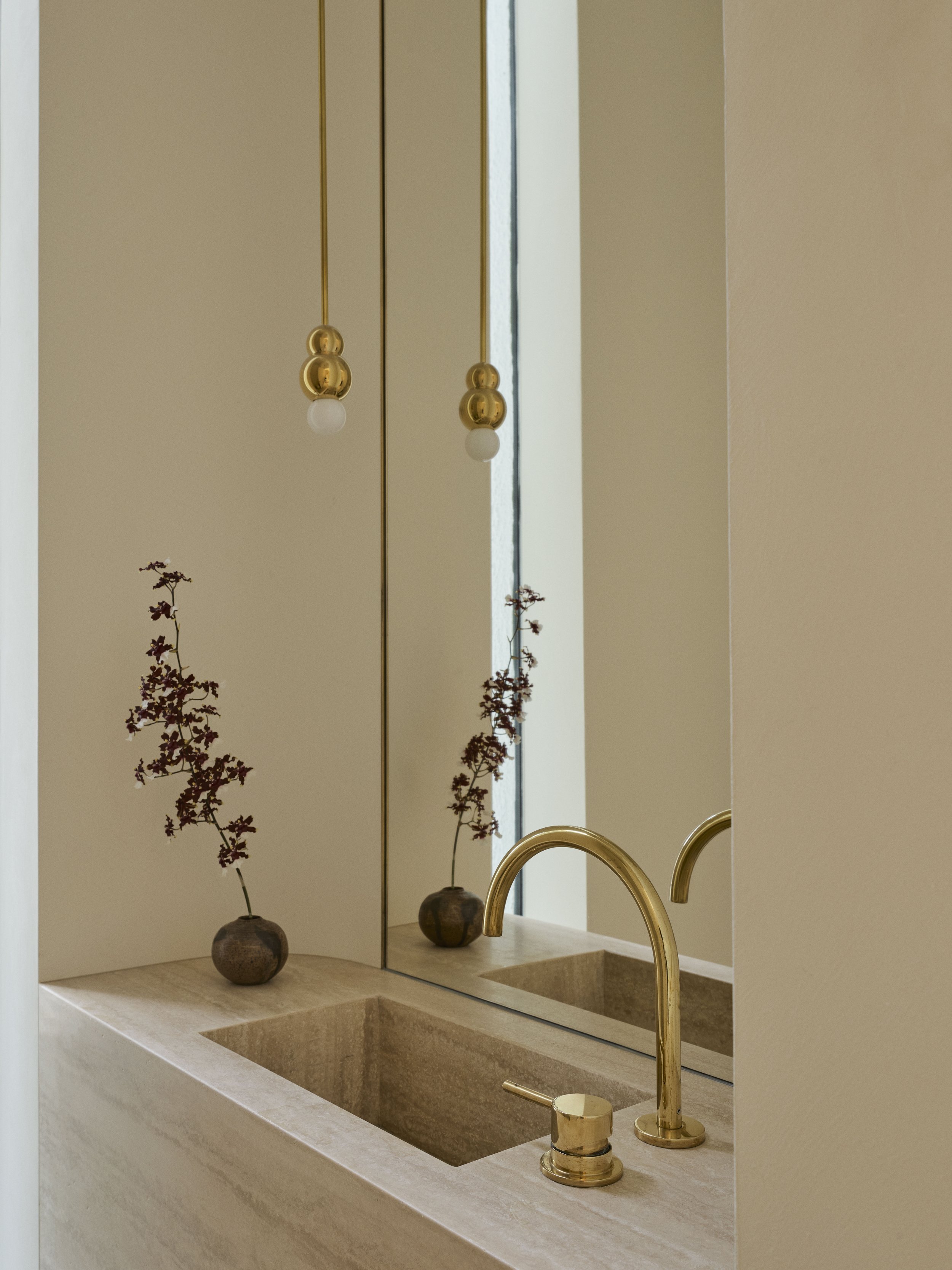
The kitchen anchors the main living level with a sense of considered permanence. A substantial travertine island commands the centre of the room, its material consistency providing calm focus for clients who cook seriously and needed surfaces to match. A butler's pantry handles the functional demands of the kitchen behind the scenes, ensuring the main space remains composed and uncluttered.
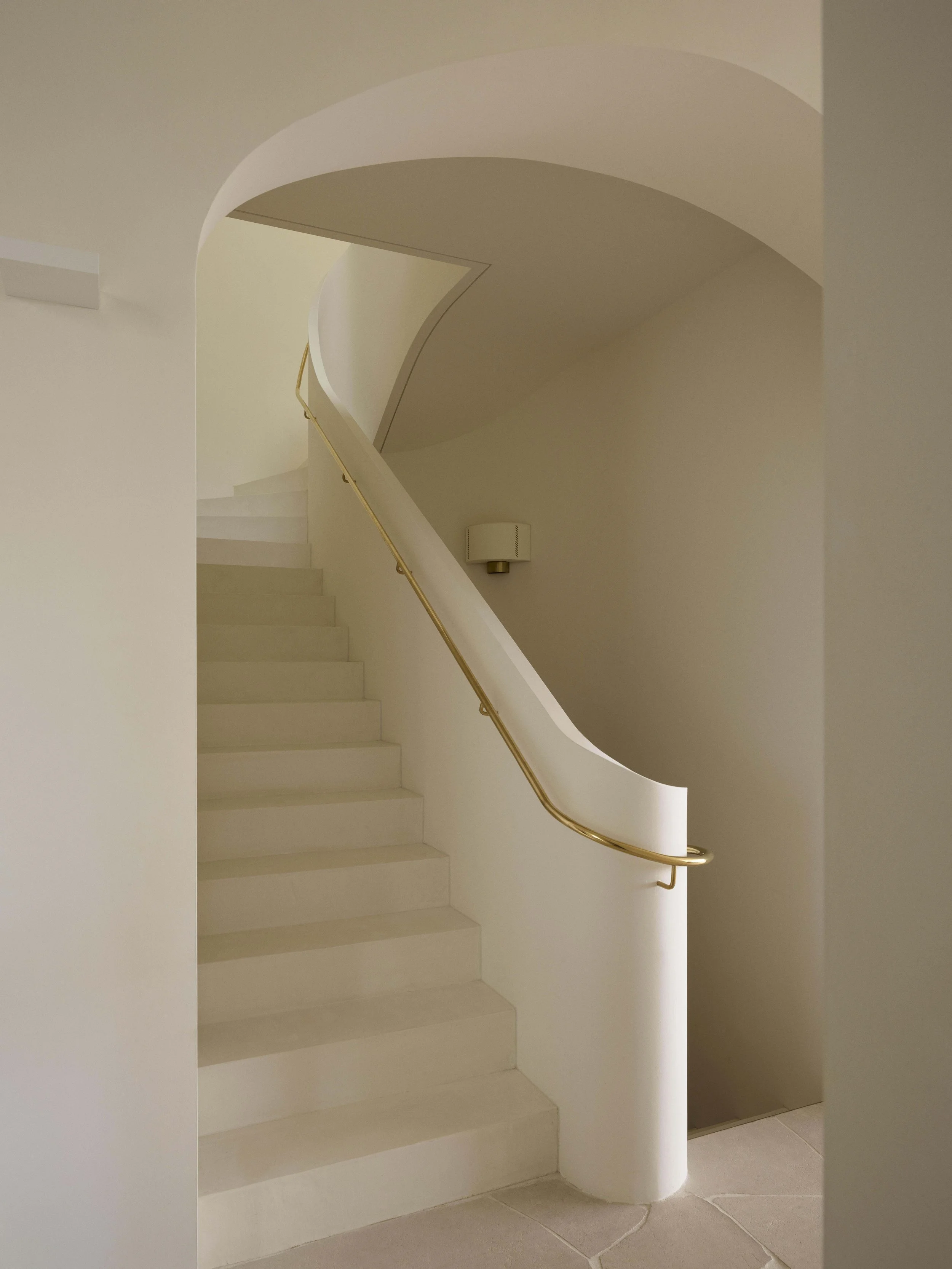
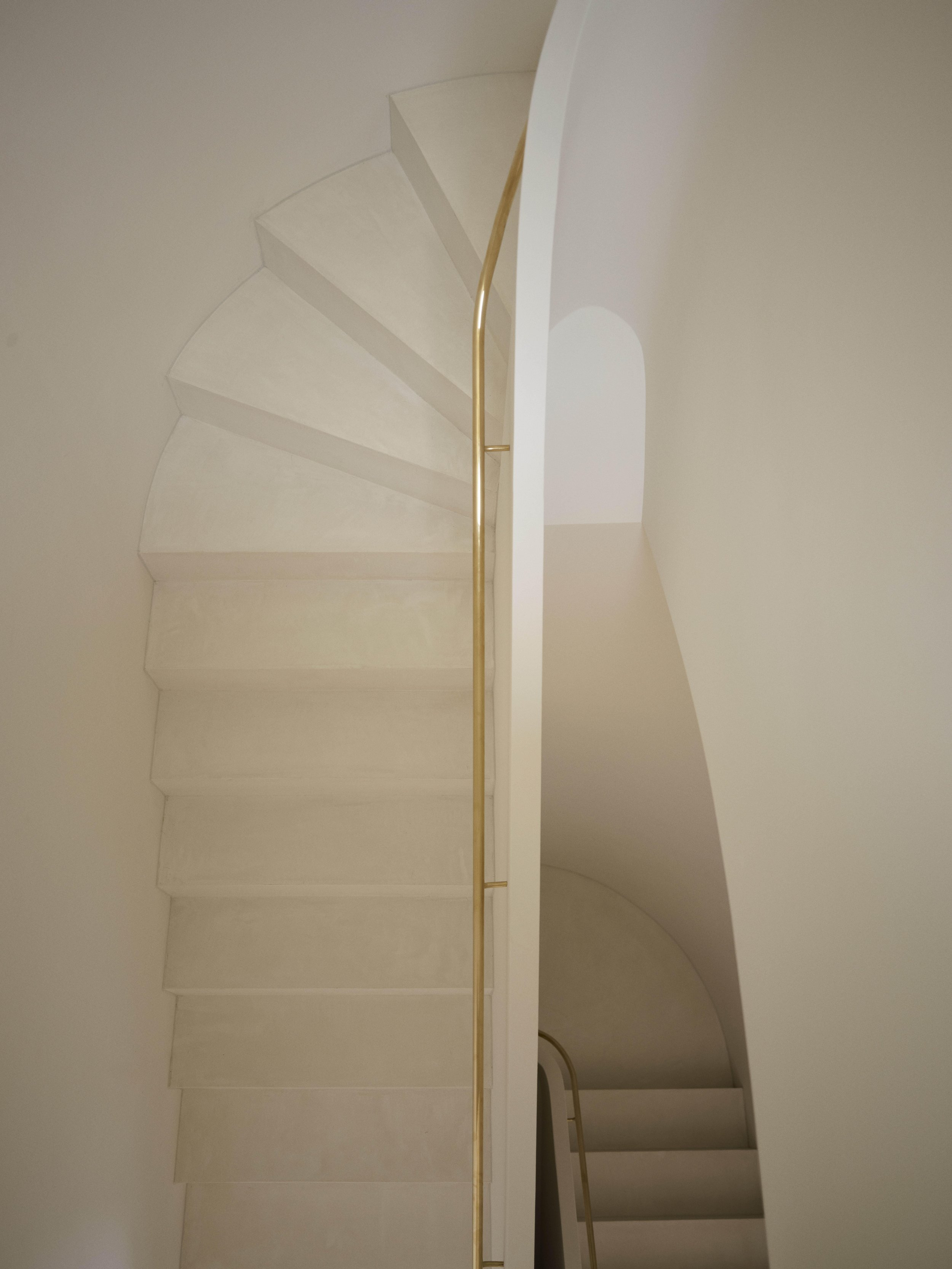
Curved geometries animate the architectural language throughout, most evident in the sculptural staircase, where every junction was meticulously detailed, 3D modelled and prototyped in plywood before construction could begin.
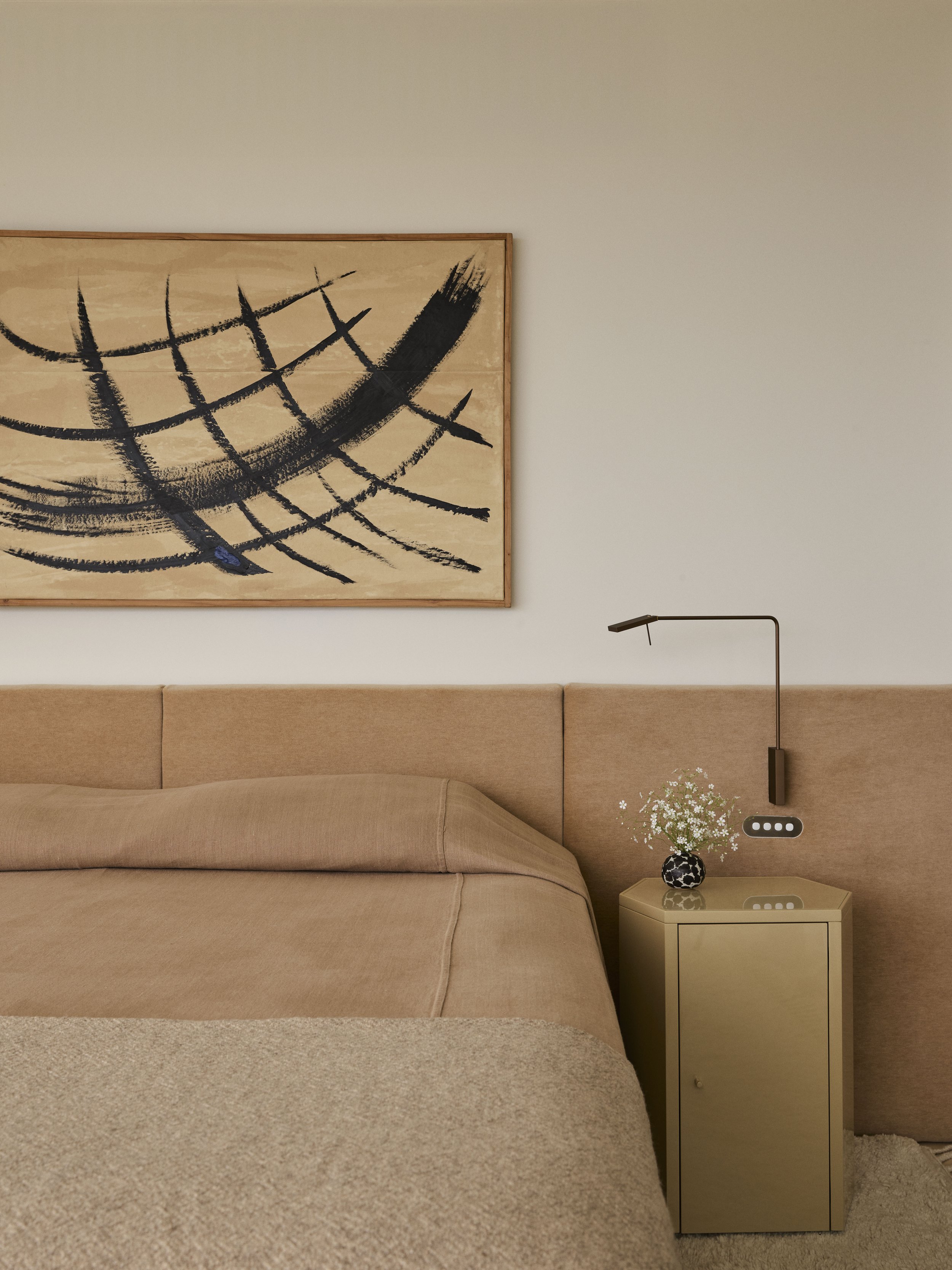
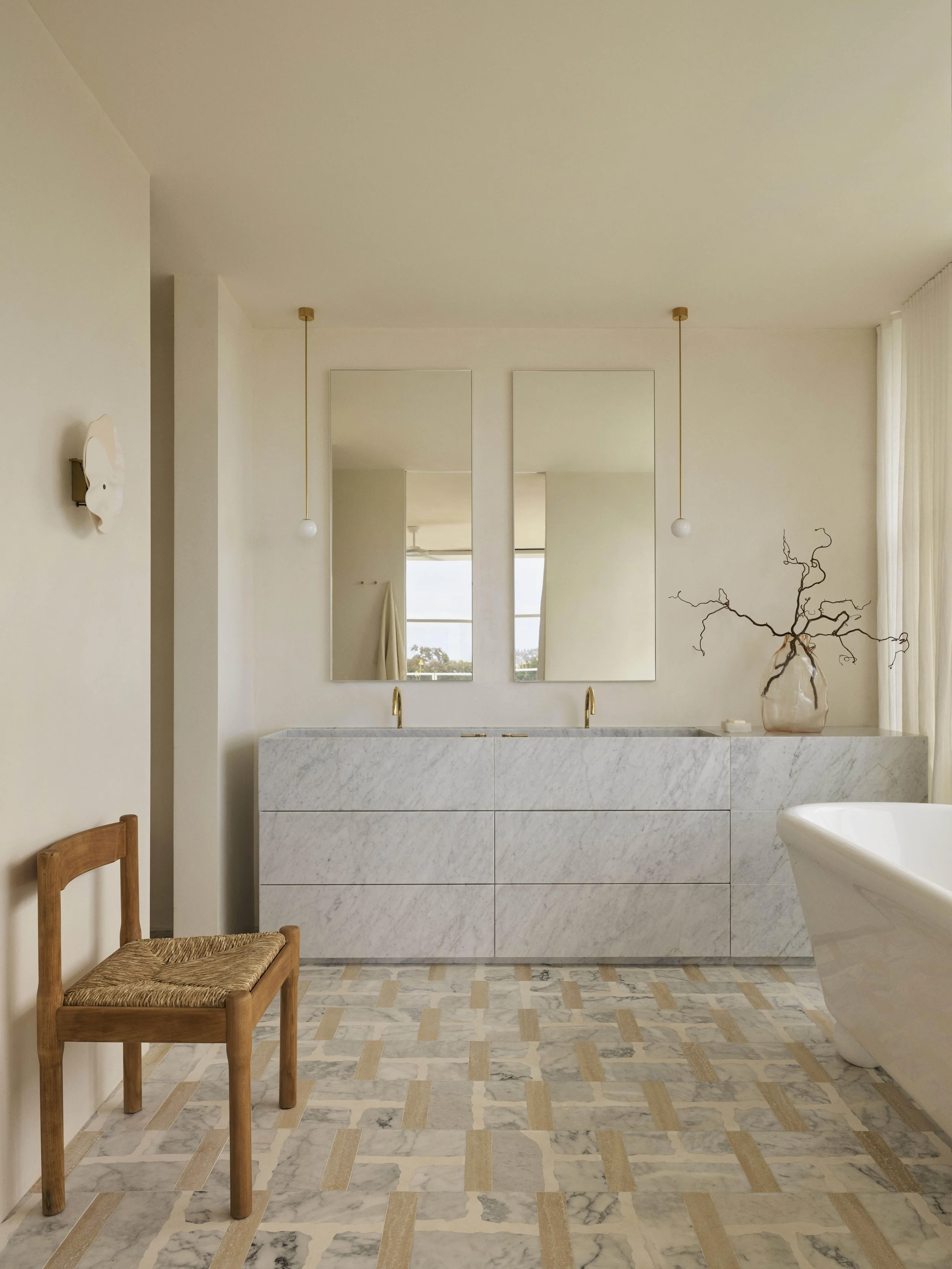
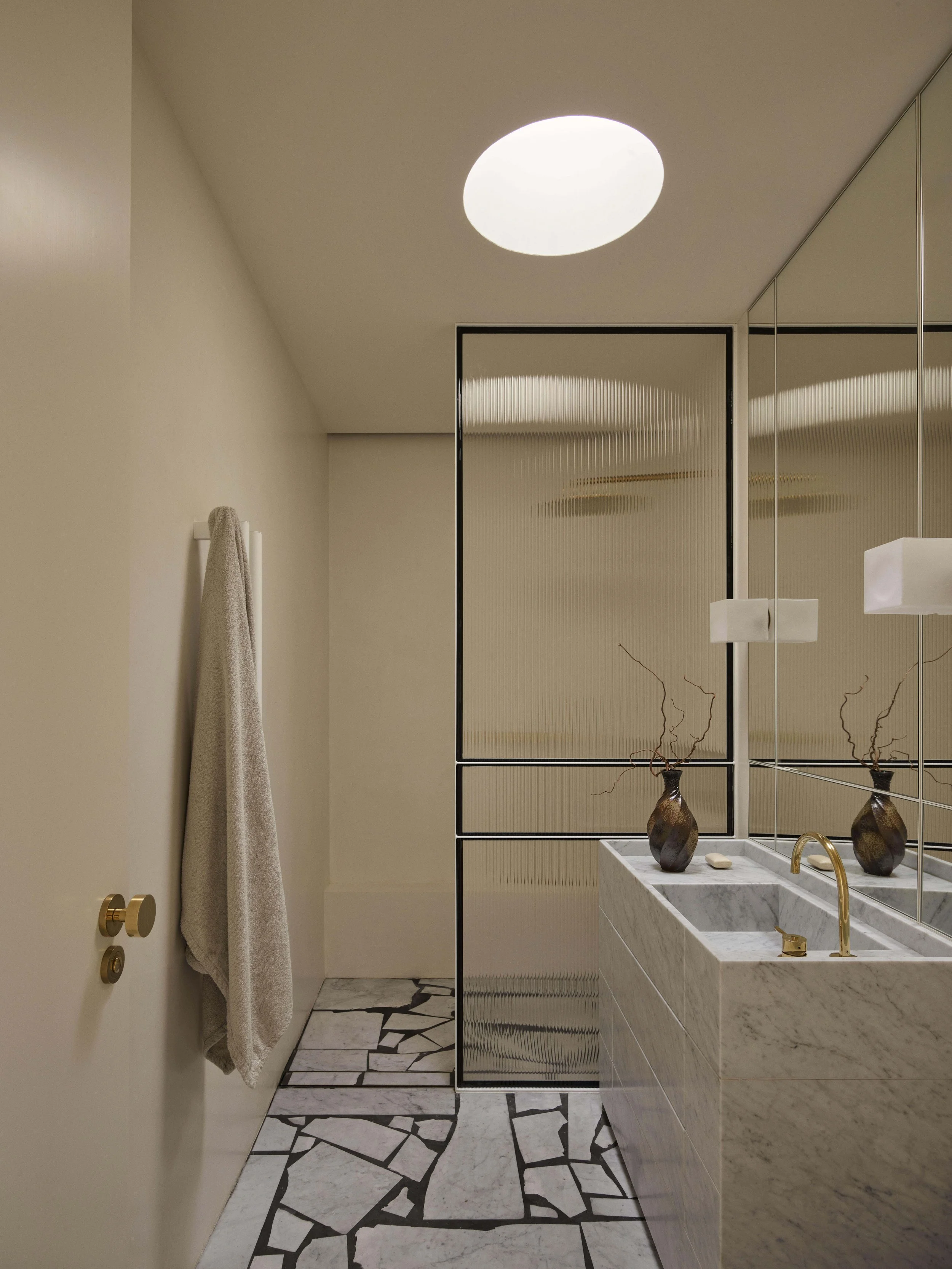
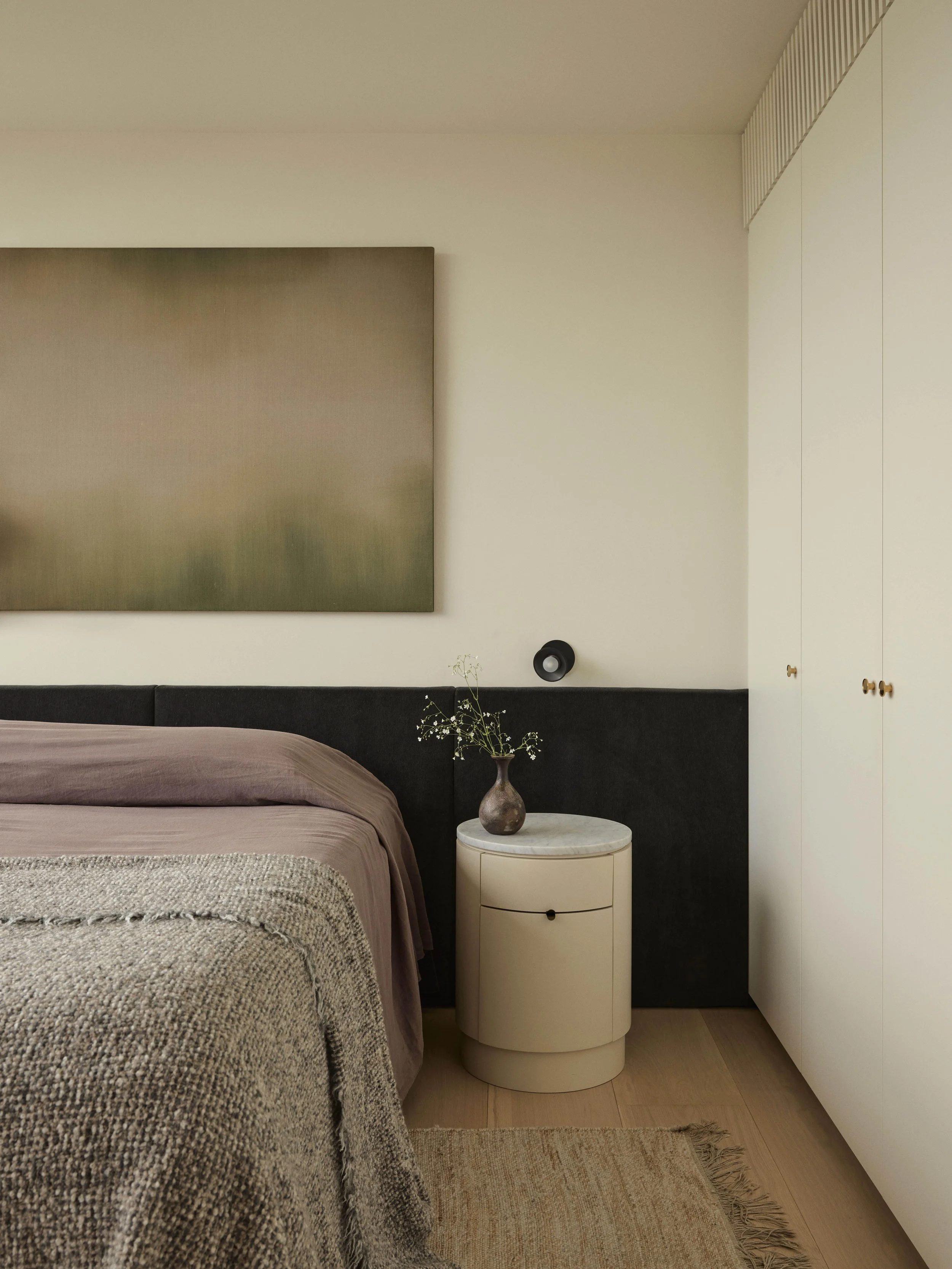
A putty-toned Murowash washes across walls and ceilings alike, its surface alive to the shifting light, softening harsh glare and holding the interior in a state of continuous warmth. Ceiling heights reach 3.2 metres, lending the interiors a generous sense of volume. Flooring choices introduce quiet moments of delight: marble fragments underfoot in one shower room; a precisely repeated tile pattern in the main ensuite that transitions seamlessly from the bedroom's oak boards.
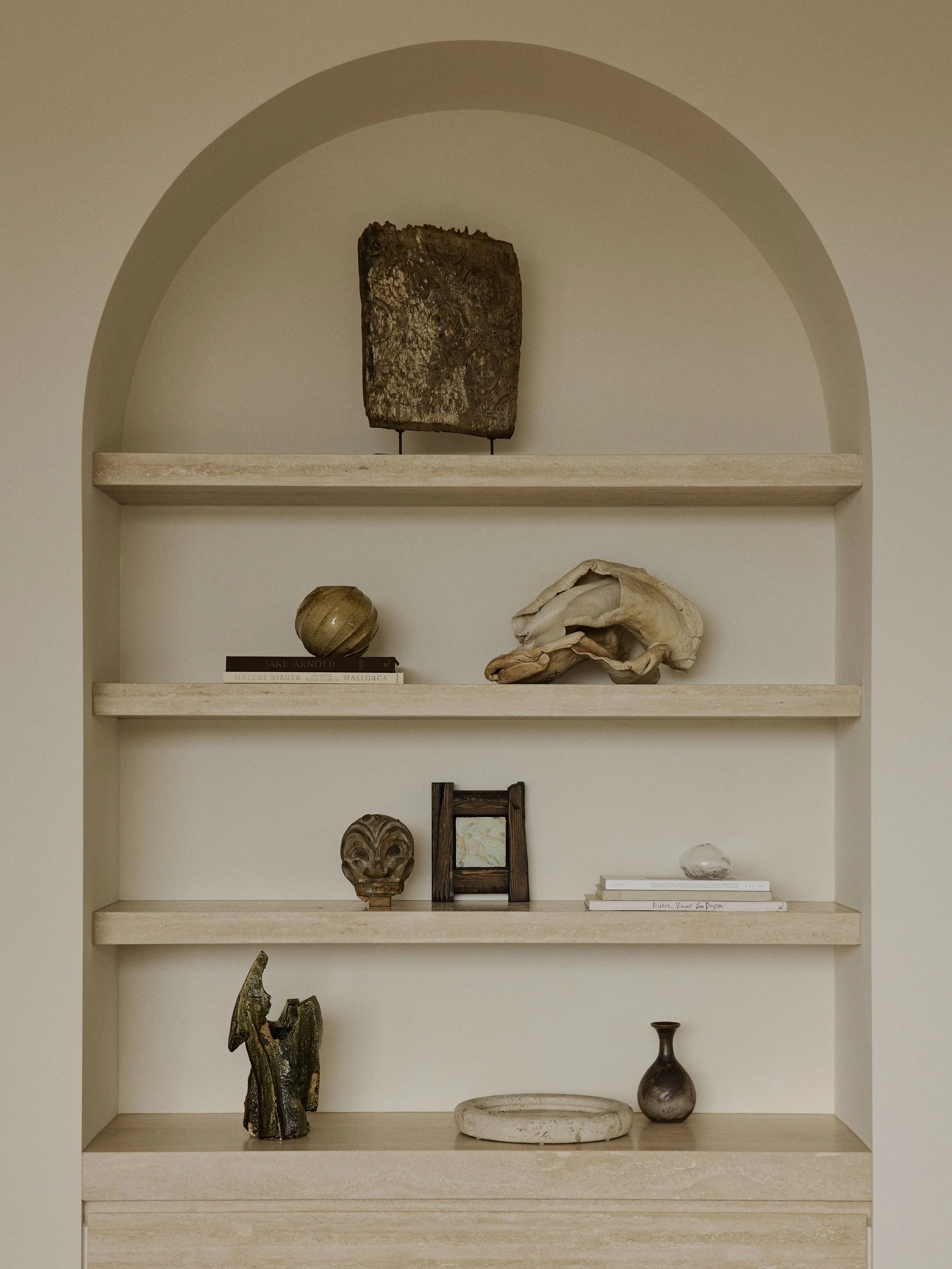
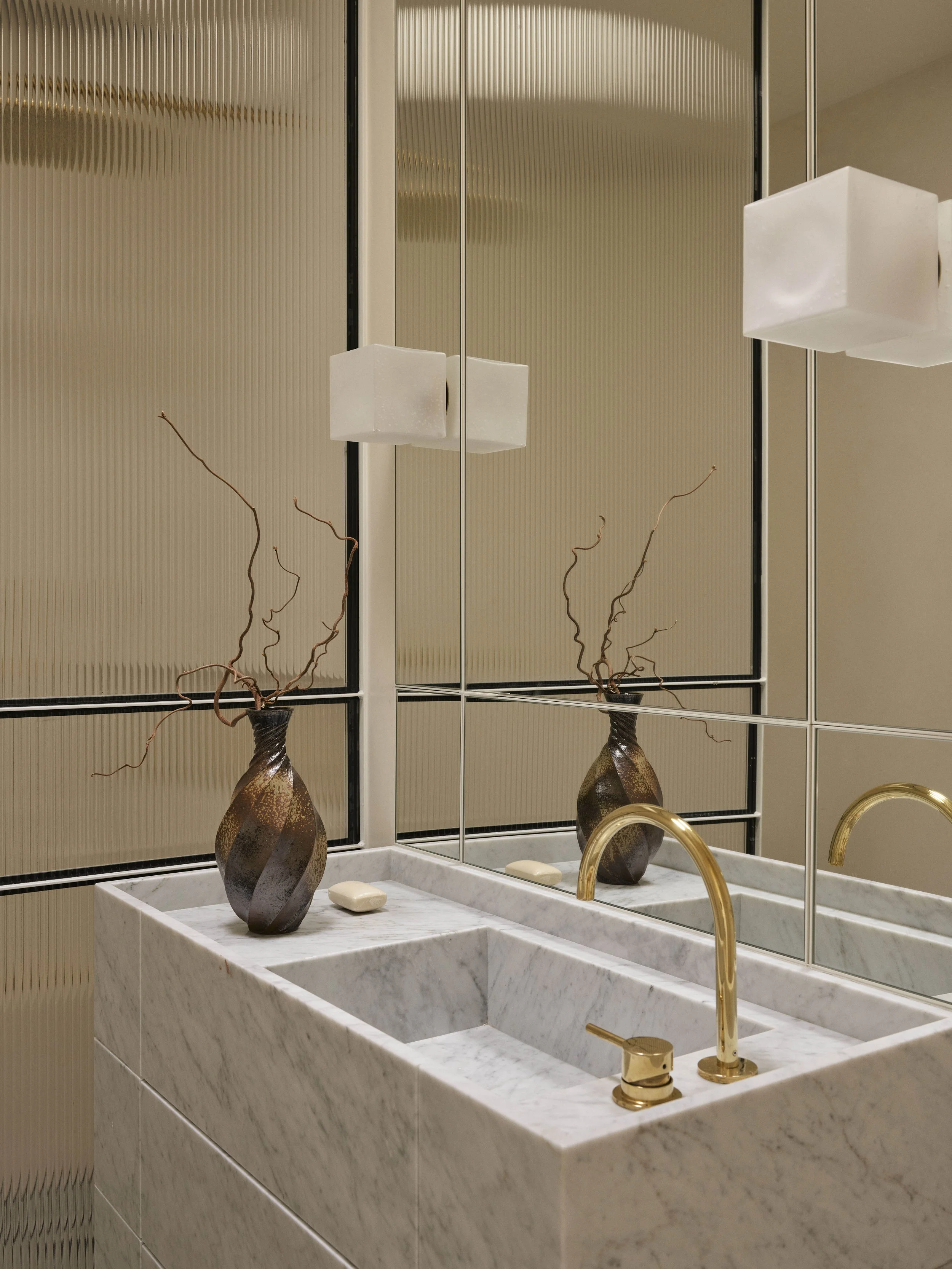
The scope extended to a full interior furnishing programme, with furniture, fabric and finish selections integrated into the architectural intent to bring a cohesiveness in which no element reads as an afterthought. Considered alongside the spatial planning from the outset, each piece was chosen for its scale, tone, and material relationship to the rooms it inhabits. The result is a home where nothing feels incidental: soft furnishings absorb and warm, occasional pieces punctuate without cluttering, and the overall palette sits in quiet conversation with the Murowash walls and natural stone underfoot.
Sydney sites often call into question how to relate to a view, with the counterbalance found through assured, cohesive architecture and interiors. That balance is what Plinth achieves: a dwelling where materiality, light, and carefully choreographed space transform expansive vistas into inhabited experience through architecture confident enough in itself to let the view simply be.
Traditional custodians: Cammeraygal People of the Eora Nation
Photography: Anson Smart
Styling: Jack Milenkovic
Team: Madeleine Blanchfield, Amber Lush, Jacqueline Lindeman